


Here is the fact most guides to cargo ebike insurance UK buyers read miss: the bike itself needs no motor insurance, but the moment you pay a rider, a £5 million employers’ liability policy becomes compulsory, with fines of up to £2,500 for every day you go without. CityQ, one of the pioneers of 4-wheel cargo bikes, sees fleet buyers get this the wrong way round, and the same legal logic behind the driving licence for a 4-wheel e-bike answer explains why.
Quick Answer (November 2026): No UK law requires motor insurance for a cargo eBike that qualifies as an electrically assisted pedal cycle (EAPC): a motor of 250W or less, assistance that cuts off at 15.5mph, and working pedals. A business must still hold employers’ liability insurance of at least £5 million if it employs riders, and should price theft and damage, public liability and goods-in-transit cover. CityQ’s 4-wheel cargo eBikes are built to EAPC rules and certified to EN 15194 and EN 17860.
Flowchart showing that a compliant cargo eBike needs no motor insurance but employers’ liability of £5 million is compulsory when you employ riders

Do you legally need insurance for a cargo eBike in the UK?
No, provided the bike is a genuine EAPC. Under the Electrically Assisted Pedal Cycles Regulations 1983, a compliant e-bike is not a motor vehicle for Road Traffic Act purposes, so it needs no tax, licence or motor insurance. Government-aligned guidance, including the Met Police’s restatement of GOV.UK rules, confirms an EAPC can have more than two wheels, so a four-wheel layout does not change the classification.
The catch is compliance. If the motor exceeds 250W, assists above 15.5mph or the bike has no working pedals, it is treated as a moped or motorcycle and needs registration, road tax, motor insurance and the right licence.
| Condition | Compliant EAPC | Non-compliant |
|---|---|---|
| Motor | 250W continuous or less | Above 250W |
| Assistance cut-off | 15.5mph | Above 15.5mph |
| Pedals | Working pedals | None / not working |
| Legal class | Pedal cycle | Moped or motorcycle |
| Motor insurance, tax, licence | Not required | Required |
Is employers' liability insurance compulsory for cargo eBike riders?
Yes, if the riders are employees. The Employers’ Liability (Compulsory Insurance) Act 1969 requires at least £5 million of cover from an authorised insurer from the day you become an employer, whatever vehicle the rider uses. GOV.UK sets the fine at up to £2,500 for each day you are not properly insured, and a further £1,000 if you cannot show the certificate when asked.
Exemptions are narrow, such as employing only close family. Self-employed couriers are a grey area worth checking with your broker, because employment status depends on how the work is actually organised, not what the contract calls it.

What insurance should a business have for a 4-wheel cargo eBike?
Only employers’ liability is a legal requirement. The rest is a commercial decision driven by risk and by what your clients ask for.
Four insurance covers for a cargo eBike fleet: employers’ liability, theft and damage, public liability and goods in transit

| Cover | Required by law? | Why it matters |
|---|---|---|
| Employers’ liability | Yes, if you employ anyone | £5m minimum, fines of up to £2,500 per day |
| Theft and damage | No | A fleet bike is a five-figure asset |
| Public liability | No | Injury or damage to the public, often demanded by clients |
| Goods in transit | No | Covers other people’s parcels and stock |
Theft deserves a plan beyond the policy. CityQ’s bikes carry tracking, and when a postal-service bike was taken, the tracking showed its location almost immediately and it was back within hours. Tracking helps recovery, but theft cover still comes from your policy, and insurers typically set lock and storage conditions.
Does personal cycle insurance cover a cargo eBike used for business?
Usually not. Personal cycle policies commonly exclude business use, deliveries and courier work. Bikmo’s cargo policy, for example, explicitly excludes deliveries and hire or reward use. Check the wording for terms like “business use”, “courier” and “hire and reward” before you rely on any policy.
Motor “hire and reward” cover is a motor insurance class, so it generally does not apply to a pedal cycle at all. Fleets are better served by public liability and goods-in-transit cover, confirmed with the insurer in writing.
Specialist products exist but have limits. Yellow Jersey’s e-cargo policy, for instance, covers theft and crash damage up to £10,000, requires a gold-rated lock whenever the bike is left unattended, and states there is no third-party liability while courier cycling, which must be arranged separately. With a CityQ costing from about £11,000, a £10,000 cap may fall short, so always ask about the maximum sum insured.
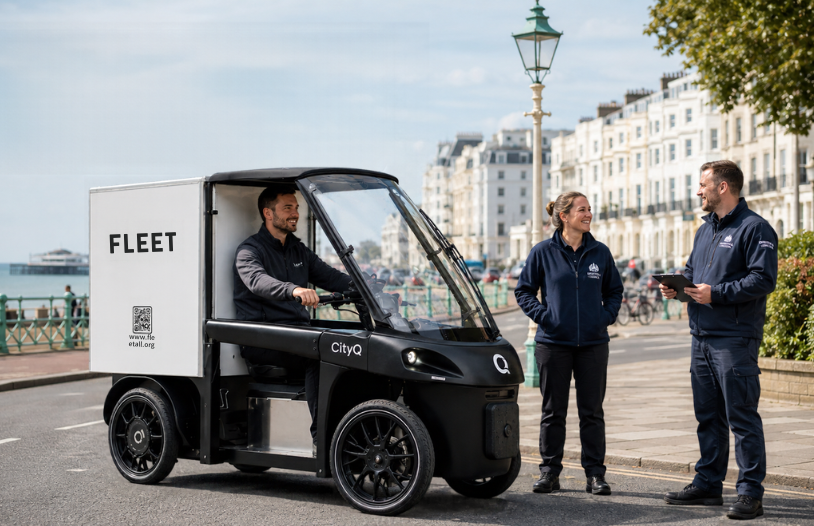
Where does a 4-wheel EAPC sit with insurers?
The law treats a compliant four-wheel EAPC as a pedal cycle. Insurers, however, set their own underwriting terms, and not every cycle insurer has a category for an enclosed four-wheel vehicle. That is why paperwork matters: EN 17860 and EN 15194 certification gives an underwriter an independent test report to point to, instead of a sales brochure.
Bring the certificates, the vehicle value and your riders’ employment status to every quote request. Our guide on how to start a cargo eBike delivery business in the UK shows where insurance fits in the running costs, and the Annual Investment Allowance can offset the purchase price itself.
FAQ's
Q1: Do you need insurance for a cargo eBike in the UK?
A1: No law requires motor insurance for a cargo eBike that qualifies as an electrically assisted pedal cycle: a motor of 250W or less, assistance that cuts off at 15.5mph, and working pedals. Business cover is still sensible, and employers’ liability insurance is compulsory if you employ riders.
Q2: Is employers’ liability insurance compulsory if my riders use a cargo eBike?
A2: Yes, if they are your employees. The Employers’ Liability (Compulsory Insurance) Act 1969 requires at least £5 million of cover from an authorised insurer, whatever vehicle the rider uses. The exemptions are narrow, such as businesses employing only close family.
Q3: What insurance should a business have for a 4-wheel cargo eBike?
A3: Most fleets look at theft and damage cover for the vehicle, public liability, goods-in-transit cover if they carry other people’s goods, and employers’ liability if they have staff. Only employers’ liability is a legal requirement, and the rest depends on your risk and your contracts.
Q4: Does personal cycle insurance cover a cargo eBike used for business?
A4: Usually not. Many personal policies exclude business use, deliveries and courier work, so theft, damage and third-party claims may fall outside cover. Check the wording for terms like “business use”, “courier” and “hire and reward”.
Q5: Do I need hire and reward insurance for a cargo eBike?
A5: Hire and reward is a motor insurance class, and a compliant EAPC is not a motor vehicle, so it generally doesn’t apply. You may still need public liability and goods-in-transit cover. Confirm with your insurer in writing.
Q6: Does a four-wheel cargo eBike count as a bicycle for insurance purposes?
A6: Under the EAPC rules, a cycle can have more than two wheels, and a compliant one is not a motor vehicle. CityQ is certified to EN 15194 and EN 17860. Insurers set their own terms, so give yours the certification documents when you ask for a quote.
Q7: What happens if a cargo eBike doesn’t meet EAPC rules?
A7: It is classed as a moped or motorcycle and needs registration, road tax, motor insurance and the right licence. That happens if the motor exceeds 250W, assists above 15.5mph or has no working pedals.
Q8: How much does business cargo eBike insurance cost?
A8: There is no standard price. It depends on vehicle value, the number of bikes, how many staff ride them, and the cover chosen. Get quotes from a cycle or fleet specialist, and ask about the maximum sum insured, because some policies cap theft and damage at £10,000.
Q9: Is a CityQ protected against theft?
A9: Theft cover comes from your insurance policy, not from the bike. CityQ states that its bikes have tracking, which helped locate a stolen postal bike. Insurers typically also set lock and storage conditions.
Q10: What should I ask an insurer before insuring a cargo eBike fleet?
A10: Ask whether business and delivery use is covered, the maximum sum insured per bike, and the lock and storage conditions. Also ask whether they accept a four-wheel EAPC and whether battery theft is covered. Bring the EN 15194 and EN 17860 certificates and the vehicle value.
Ready to cost it for your own fleet?
Insurance is one line in a fleet budget that already beats a van on running costs, so the quickest way to see the full picture is to book a test drive and bring your insurer’s questions with you. If you carry heavier loads, the CityQ 1200 or the CityQ Pickup & Customize are the models most fleets quote first, and you can get an offer with the certificates your underwriter will ask for.
Find your nearest service and demo centres too, because an insurer that hears “no motor insurance needed” will still want to know who services the bike.
The cheapest policy is the one you read before the claim, not after it.


