


Running a cargo eBike for business in a UK city costs a fraction of what a diesel van costs, and for many London operators the switch pays for itself within a year. This post runs the real numbers: daily running costs, what the bike can carry, how far it goes, what you legally need to ride one, and an honest answer to where a van still wins.
Quick answer (as of October 2026): For most urban UK businesses making regular local deliveries or site visits, yes. A London business running a cargo eBike five days a week saves over £10,000 a year on fuel, ULEZ and Congestion Charge alone, compared with a non-compliant diesel van. The bike pays no road tax, has no legal insurance requirement, and its purchase cost qualifies for 100% first-year tax relief under the Annual Investment Allowance. The honest caveat: if your loads regularly exceed 170 kg, your routes are rural, or you cover more than about 60 miles a day, a van is the more practical choice.
Electric cargo bikes come in many shapes, so this guide uses the CityQ 1200, a 4 wheel electric cargo bike, as the worked example. Its numbers are published and its design (roof, windscreen, sealed cargo box) is closest to a small van, which makes it easy to test against what real companies are already getting from their cargo eBikes. What follows is the verdict: is it worth it?

What does a cargo eBike actually cost to run?
A cargo eBike costs roughly £1–£2 a day in electricity. A non-compliant diesel van doing the same London rounds costs about £54 a day once fuel, ULEZ, Congestion Charge, road tax and insurance are counted.
| Daily cost item (London, 5 days a week) | Diesel van | CityQ cargo eBike |
|---|---|---|
| Fuel / electricity | ~£16 | ~£0.50–£2 |
| ULEZ | £12.50 | £0 |
| Congestion Charge | £18 | £0 |
| Road tax (daily share) | ~£1.50 | £0 |
| Insurance (daily share) | ~£5.75 | optional cover only* |
| Daily total | ~£54 | ~£0.50–£2 |
Insurance is not a legal requirement for an EAPC, but most businesses insure the bike and their goods; see the legal section below.
The chart above uses these annual figures for a non-compliant diesel van in central London, over 260 working days (5 days × 52 weeks):

The annual picture
| Annual cost | Diesel van | CityQ cargo eBike |
|---|---|---|
| Fuel / electricity | £4,150 | ~£300 |
| Insurance | £1,500 | £0 required; optional cover £500–£800 |
| ULEZ + Congestion Charge | £7,930 | £0 |
| Road tax + MOT | £394 | £0 |
| Total | ~£13,974 | ~£800–£1,100 |
Van figures are averages: fuel assumes 12,000 miles a year at 30 mpg; insurance is a typical commercial van policy of £1,300–£1,700. Neither column includes servicing or maintenance. CityQ’s own all-in estimate, which does include maintenance, is £1,300–£2,100 a year. A full-year electricity bill depends on your tariff: a full dual-battery charge costs about 23p on a cheap overnight tariff and 75.2p at the Ofgem standard variable cap (battery guide)
How the zone charges add up
ULEZ is £12.50 a day and the Congestion Charge rose to £18 a day in January 2026. Together that is £30.50 a day, or £7,930 a year over 260 working days. Two caveats apply:
- ULEZ only hits non-compliant vans. A Euro 6 diesel van pays no ULEZ charge, though it still pays the £18 Congestion Charge if it enters the central zone. For that van, the zone-charge line is about £4,680 a year and the van total is about £10,700.
- Congestion Charge only applies in the central zone. If your rounds stay outside it, that line is zero.
Even in the best case for the van, the gap is large. Outside London there are no zone charges to save, so the case rests on fuel, insurance and tax, and payback is slower, typically nearer two years if you replace a delivery van that never paid them.
Payback in London
A CityQ 1200 costs in the region of £10,000–£11,000 . Using only the fuel, ULEZ and Congestion Charge saving (about £11,780 a year after electricity), a £11,000 purchase pays back in around 11 months before tax relief. After 25% tax relief under the AIA (see below), the net cost is about £8,250 and payback falls to roughly 8 months.
What can a 4-wheel cargo bike carry?
The CityQ 1200 carries up to 170 kg in a 1.3 m³ cargo space, with a box measuring 131 cm × 89 cm × 115 cm (CityQ 1200 specifications). A small van typically carries roughly 500–800 kg, so a 4 wheel cargo bike does not match it on raw weight. For the loads most city businesses actually move, it does not need to:
- Courier and last-mile: a full round of parcels, which are bulky but light.
- Food and beverage: a morning bakery drop, café stock transfers, catering packs and supplier runs.
- Trades: a tradesperson’s tools and parts for a day of urban call-outs. CityQ’s HVAC and trades guide shows how this plays out on real jobs.
- Councils and facilities: grounds equipment, supplies and inspection kit.
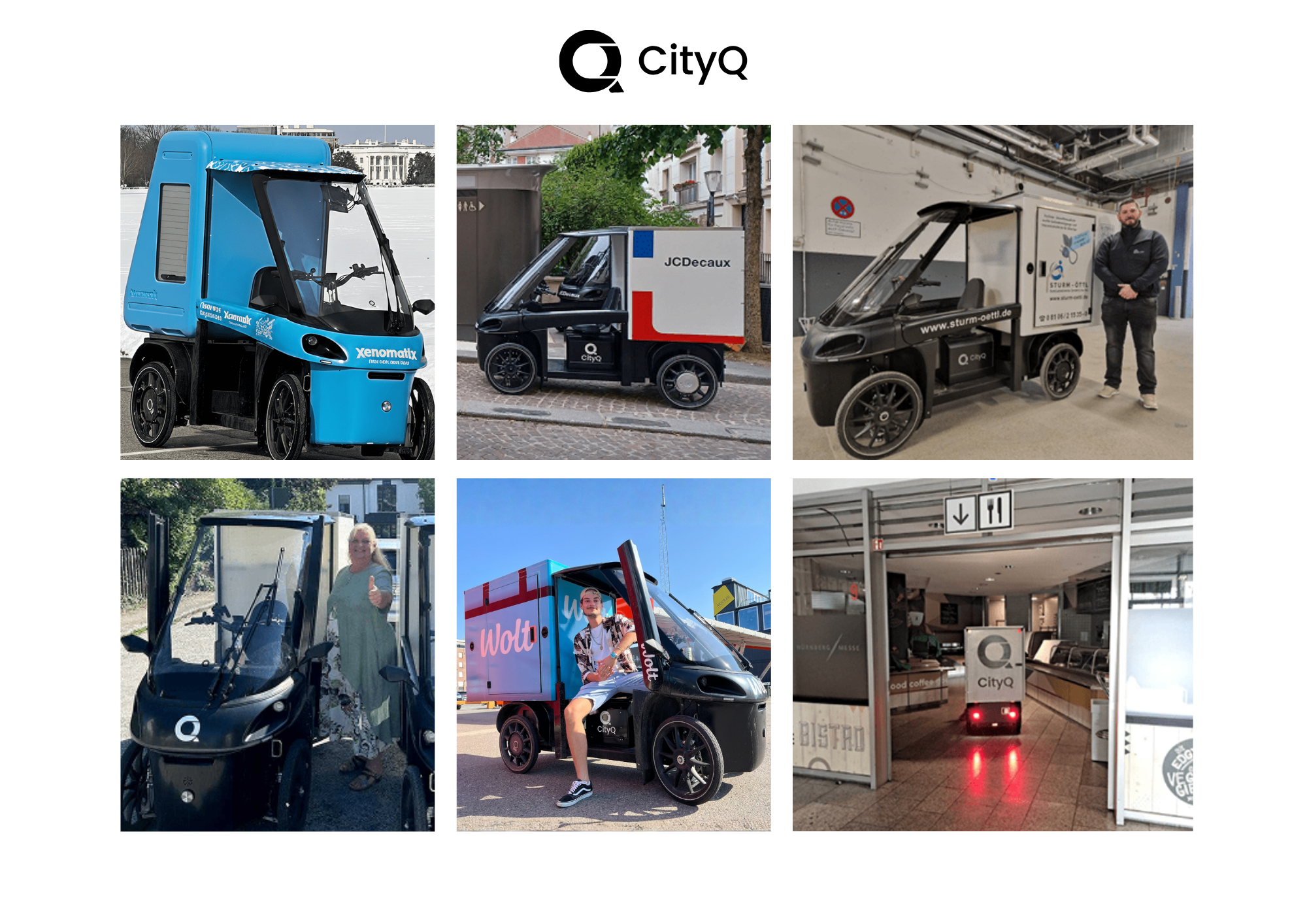
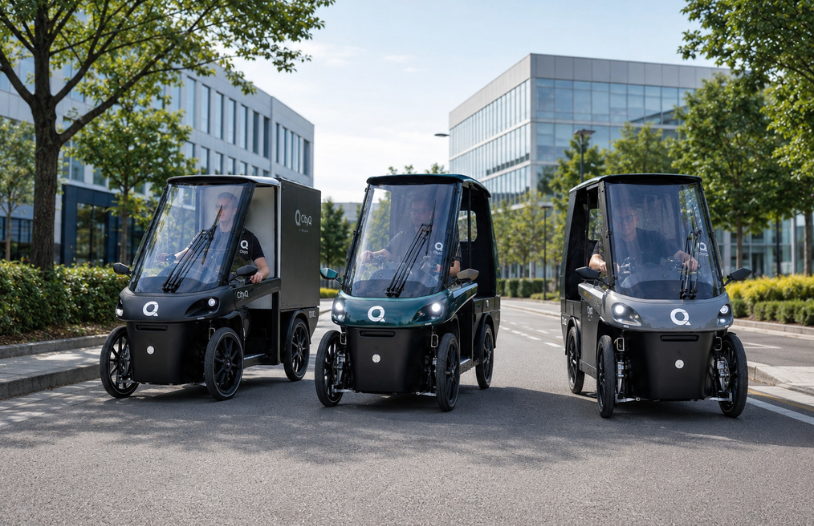
Because the bike has four wheels, a roof and a sealed box, loads stay dry and the rider is protected from the weather, which is the main practical difference from an open two-wheel cargo bike. That matters for year-round cargo ebike for in city delivery.
Is it legal? What the UK EAPC rules mean for your business
In the UK, a cargo eBike that meets the EAPC (Electrically Assisted Pedal Cycle) rules is legally a bicycle. To qualify, the motor must be 250 W or less, assistance must cut off at 15.5 mph (25 km/h), and the bike must have working pedals. The CityQ 1200 has two 125 W motors (250 W combined), cuts assistance at 25 km/h, has working pedals, and is certified to EN 15194 and EN 17860. It is the first 4 wheel cargo bike approved to EN 17860, according to CityQ.
That classification means, for a 4 wheel electric bike UK business user:
- No driving licence. The minimum rider age is 14. refer to do you need a driving licence for a 4-wheel e-bike?
- No vehicle tax.
- No MOT.
- No legally required insurance. That is the law, not necessarily good practice: most businesses cover the bike, their goods and public liability, and specialist cover typically costs £500–£800 a year [VERIFY: confirm with an insurer; the brief quotes optional cover from about £100].
- No ULEZ, Congestion Charge or Clean Air Zone charges. Cities including Birmingham, Bristol and Bath charge non-compliant vans daily; a cargo eBike is exempt from all of them.
These exemptions matter most in the capital, where a cargo ebike for business in London avoids both the ULEZ and the Congestion Charge on every round.
How far does a cargo eBike go, and can you recharge mid-route?
The CityQ 1200 has a stated range of up to 100 km (about 62 miles) on a full dual-battery charge, though actual distance varies with payload, terrain and riding style. For comparison, electric cargo bikes in general typically manage 20–75 miles per charge.
The batteries are LiFePO4 and are designed to be swapped in seconds, so a fleet can fit a charged pack mid-shift instead of waiting for a recharge. They are rated for 2,000–4,000 full cycles at 80% retention, which CityQ puts at 6–10 years of daily charging, so how far it travels on a charge stays within about 80% of its original range for years, not just the first season.
In practice, a city round with dense stops, say 20–40 miles in a day, sits comfortably inside one charge. A 60-mile day is near the limit, and a day of long, spread-out rural drops is outside it.
Is a cargo eBike 100% tax deductible?
For most businesses buying a cargo eBike, yes, in the sense that the Annual Investment Allowance (AIA) lets you deduct 100% of the purchase cost from taxable profit in the year you buy it. The AIA limit is £1 million, far above the price of a bike.
On an £11,000 bike, the tax relief on a cargo eBike is worth £2,750 to a company paying 25% corporation tax, which brings the net cost down to £8,250. A sole trader or partner taxed at 40% saves £4,400, for a net cost of £6,600. Your own saving depends on your profits, your tax rate and any other allowances you have already claimed, so confirm the figures with your accountant before you buy.
Where a cargo eBike still loses to a van

A cargo eBike is not the right tool for every job. A van is the better choice when:
- Your loads exceed 170 kg. The CityQ 1200’s payload is 170 kg. A van carries several times that.
- Your routes are long or rural. With a range of up to 100 km and sparse charging outside cities, a bike is built for urban, dense rounds.
- You need to carry passengers. The standard cargo models are built for one rider and cargo. (CityQ offers a separate Passenger model.)
- A crew of two travels together with tools and materials to an outdoor job.
- Your streets are very tight. The CityQ 1200 is 89 cm wide, which suits cycle lanes but may not fit through closely spaced bollards or narrow gaps that a two-wheel bike can.
For everything else (urban, regular, sub-170 kg loads), a cargo eBike for business is usually the cheaper and faster option.
What the evidence says about speed and reliability
CityQ’s published case study of DHL’s London operation reports over one million kilometres of operation across two years with no reported rider injuries. Other operators report similar benefits with different bikes. Mungo Morgan of ManMaid, a cargo bike operator, told Hammersmith & Fulham Council that in rush-hour Fulham, cargo bikes are “ten times quicker” than a van, because they can use cycle and bus lanes. That is one operator’s claim for one set of conditions, not a general guarantee. Oxford’s Pedal and Post says its cargo bike fleet saves 100,000 van miles a year.
FAQ's
Q1: Can a cargo eBike replace a delivery van for my business?
A1: Yes, a cargo eBike can replace a delivery van for urban routes of up to about 60 miles a day and loads under 170 kg. The CityQ 1200 4 wheel electric cargo bike carries up to 170 kg and 1.3 m³, which covers most courier, food and trade rounds in a city. A van is still the better choice for heavier loads or long rural distances.
Q2: How much does a cargo eBike cost to run per day compared with a van?
A2: A cargo eBike costs roughly £0.50–£2 a day to run, against about £54 a day for a non-compliant diesel van in London. The van figure combines fuel (about £16), ULEZ (£12.50), Congestion Charge (£18), road tax and insurance, while the cargo eBike’s daily cost is electricity, with insurance optional. That is a saving of about £50 for every operating day (as of October 2026).
Q3: What can a 4-wheel cargo eBike actually carry?
A3: A 4-wheel cargo eBike such as the CityQ 1200 carries up to 170 kg in a 1.3 m³ cargo space measuring 131 cm × 89 cm × 115 cm. That covers a full day of food deliveries, a tradesperson’s tools or a standard courier round. A small van carries roughly 500–800 kg, so above about 170 kg a van wins on capacity.
Q4: How far does an electric cargo bike go on one charge?
A4: An electric cargo bike typically goes 20–75 miles on one charge, and the CityQ 1200 has a stated range of up to 100 km (about 62 miles) on dual batteries. Real range varies with payload, terrain and riding style. The batteries can be swapped in seconds, so a fleet can fit a charged pack mid-route.
Q5: Do I need a driving licence to ride a cargo eBike in the UK?
A5: No, you do not need a driving licence to ride a cargo eBike in the UK, provided it is classed as an EAPC (Electrically Assisted Pedal Cycle). An EAPC also needs no vehicle tax or MOT, insurance is not a legal requirement, and the minimum rider age is 14. To qualify, the motor must be 250 W or less, assistance must cut off at 15.5 mph (25 km/h), and the bike must have working pedals.
Q6: Does a cargo eBike avoid the ULEZ and Congestion Charge?
A6: Yes, a cargo eBike classed as an EAPC is legally a bicycle and is exempt from both the London ULEZ (£12.50 a day for non-compliant vans) and the Congestion Charge (£18 a day in 2026). Over 260 working days, that avoids £7,930 a year for a non-compliant van in central London. Clean Air Zones in Birmingham, Bristol and Bath also exempt cargo eBikes.
Q7: Is a cargo eBike tax deductible in the UK?
A7: Yes, a cargo eBike bought for business use qualifies for the Annual Investment Allowance (AIA), which lets you deduct 100% of its cost from taxable profit in the year of purchase. The AIA limit is £1 million, far above the price of a bike. The tax you actually save depends on your profits and tax rate, so check with your accountant.
Q8: What types of business is a 4-wheel electric cargo bike suited to?
A8: A 4-wheel electric cargo bike suits urban businesses that make several short stops a day. That includes couriers and last-mile operators, cafés, bakeries, breweries and caterers, tradespeople such as plumbers, electricians and HVAC engineers, councils and facilities teams, and retailers with daily stock runs. The roof and enclosed cargo box make it usable all year.
Q9: How much does a cargo eBike cost to buy?
A9: A cargo eBike costs from around £3,000 for entry-level models to well over £10,000 for fleet-grade bikes, and the CityQ 1200 is in the region of £10,000–£11,000. The Annual Investment Allowance cuts the net cost by your tax rate, so an £11,000 bike costs about £8,250 after relief at 25%. In London, the saving on fuel and zone charges can recover the price within a year.
Q10: Where does a cargo eBike still lose to a van?
A10: A cargo eBike loses to a van on loads over 170 kg, long or rural routes, carrying passengers, and crews of two travelling together with tools. It is also less suited to streets with very tight bollards or narrow gaps, since the CityQ 1200 is 89 cm wide. For urban, regular, lighter loads, a cargo eBike is usually cheaper and faster.


