Run a full day of city jobs without the van overhead
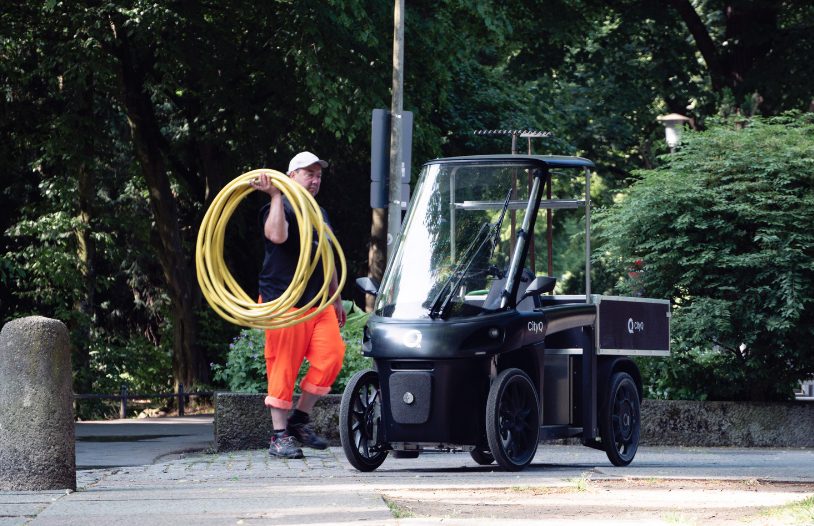
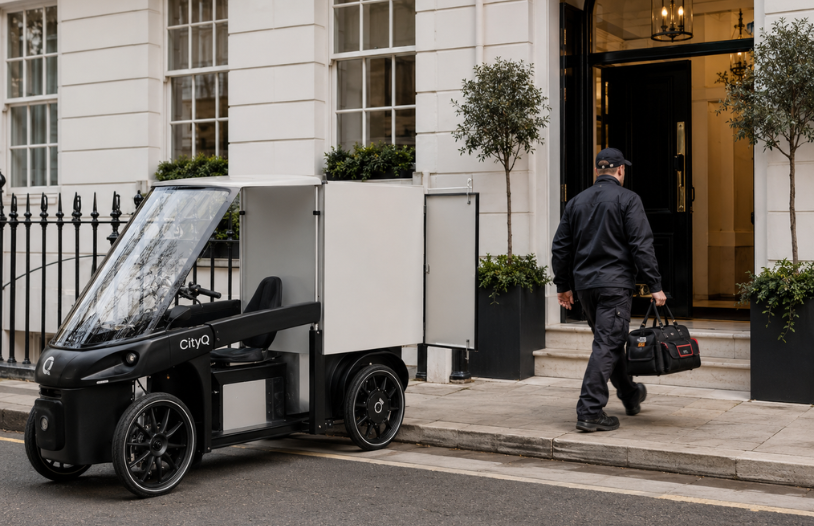
An electric cargo bike for trades, built for city work: service calls, maintenance rounds, parts runs and reactive call-outs — without building your whole day around a van, a meter and a parking ticket.
CityQ is a four-wheel enclosed electric cargo bike made for field service. Quick kerbside stops, secure tool storage, and free parking at the exact address — so your engineers reach more jobs in a day without the cost and friction of a van. The same pressures that put Electric Cargo Bike London operators ahead of the cost curve are now hitting trade and field-service businesses just as hard — and the answer is turning out to be the same.
The Numbers That Matter to a Trade Business
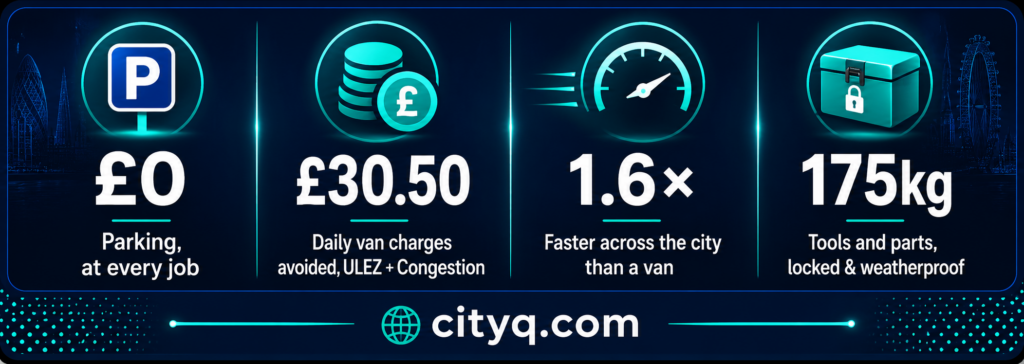
A trade business doesn’t lose money on fuel. It loses money on the day falling apart the ticket while you’re inside a job, the last call-out handed to a competitor because you ran late. CityQ changes the maths that actually moves your margin.
What Makes the Electric Cargo Bike a Trade Vehicle.
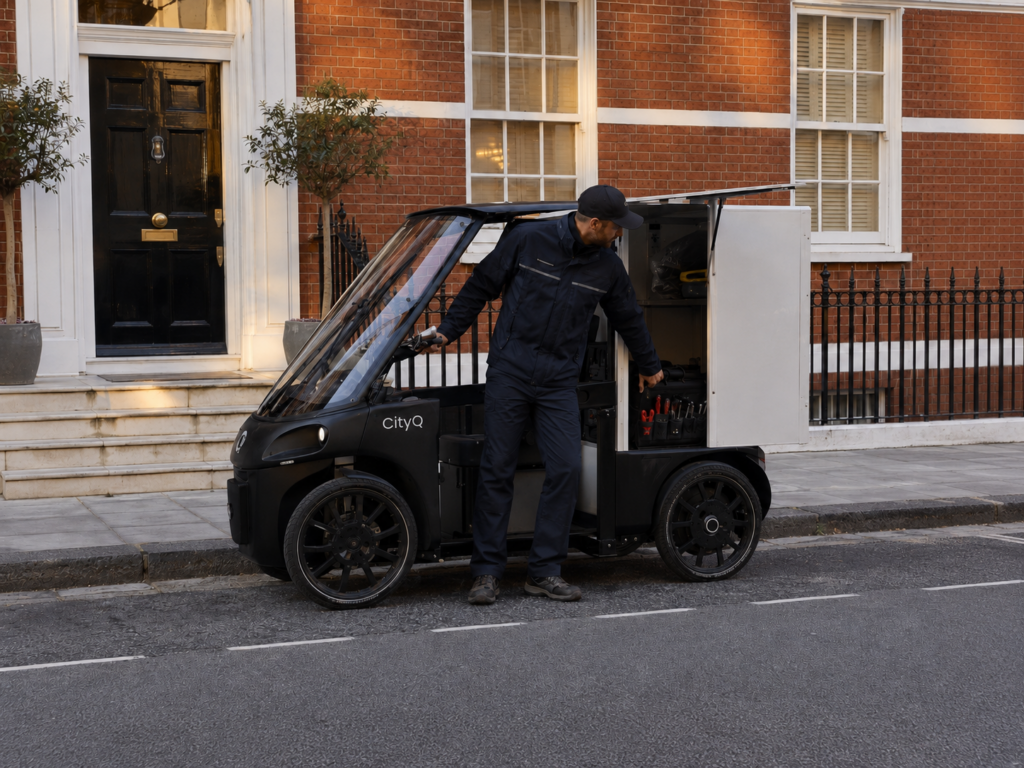
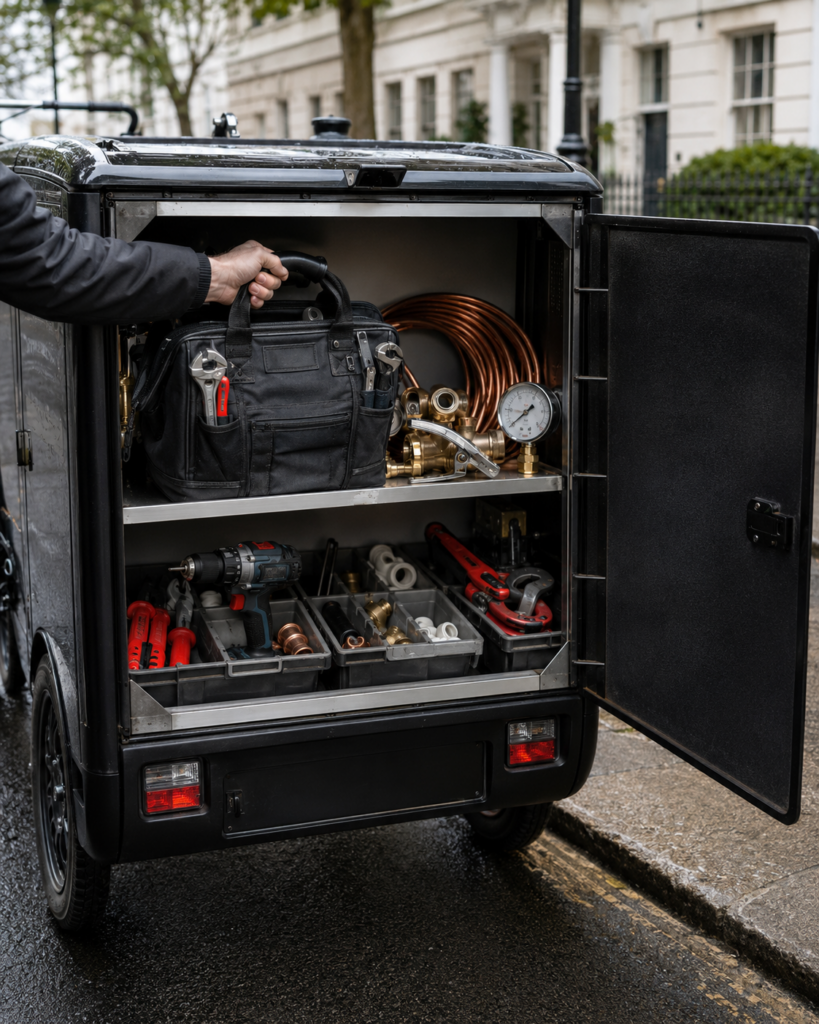
Up to 175kg payload in a lockable, weatherproof cargo box on the CityQ 850 — a full day of HVAC, plumbing or electrical tools plus parts.
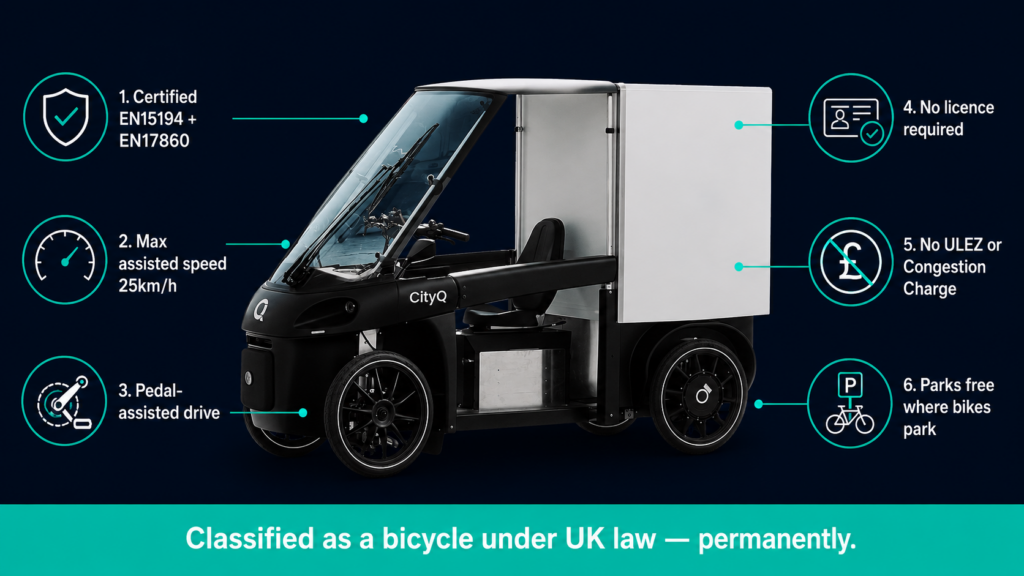
Legally a bicycle under EN15194 and EN17860, so no driving licence, no ULEZ, no Congestion Charge, no road tax and no MOT.
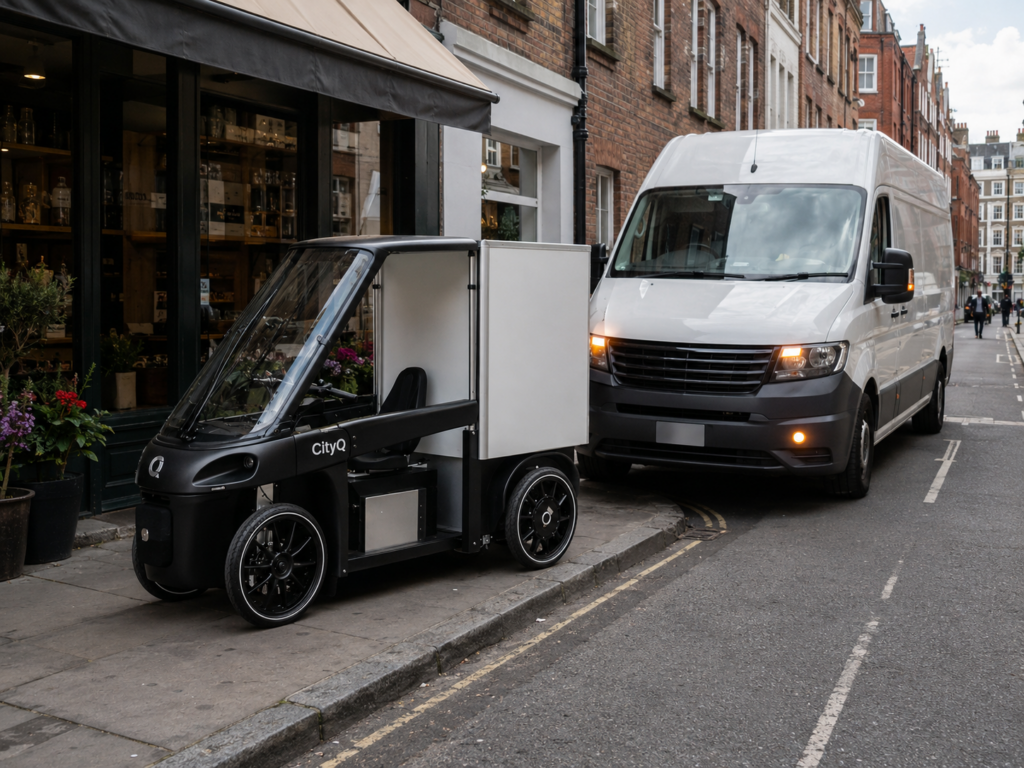
Parks free at the kerb at the exact address, with no meter to expire while a job overruns.
The 4 Things That Break a Trade Engineer's Day
1) The job overruns — and the ticket lands while you’re inside
Nobody books a parking bay for the time a fault actually takes. A one-hour boiler service becomes two, the meter expires, and the PCN is on the windscreen before the job is even finished. CityQ parks free at the kerb with no meter at all — stay as long as the job needs.
2) One overrun collapses the whole day
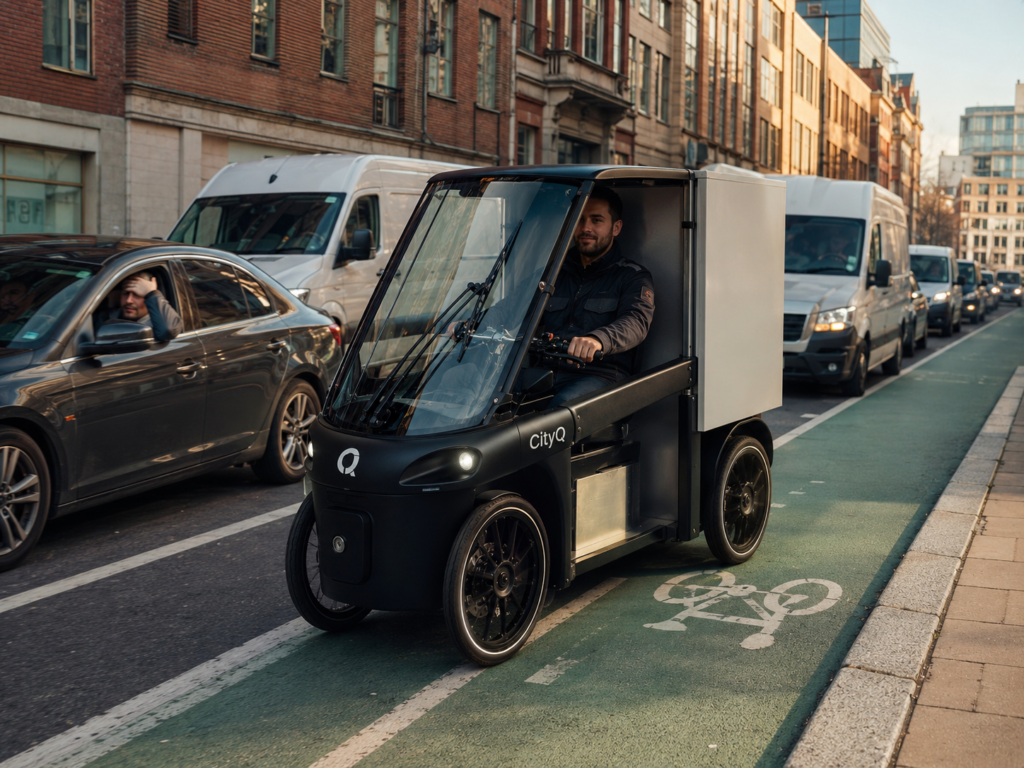
A late finish in Westminster makes you late to Soho, then Clerkenwell, until the last and most profitable call-out gets pushed to tomorrow or handed to a competitor. CityQ moves through traffic via cycle lanes and Low Traffic Neighbourhoods, so the schedule holds — and you keep the last job.
3) Every city charge comes out of your margin
ULEZ, Congestion Charge, fuel and parking stack up on a vehicle that spends most of its day stationary. From 2026, even electric vans pay the Congestion Charge. CityQ pays none of it. It’s the same cost shift now reshaping commercial fleets across the country, set out in the electric cargo bike fleet UK picture.
4) Finding engineers who hold a licence is getting harder
Tying every role to a driving licence shrinks an already tight hiring pool. CityQ needs no licence — any capable engineer or apprentice who can ride a bike can be on the road after a short induction.
A Trade Engineer's Day on CityQ
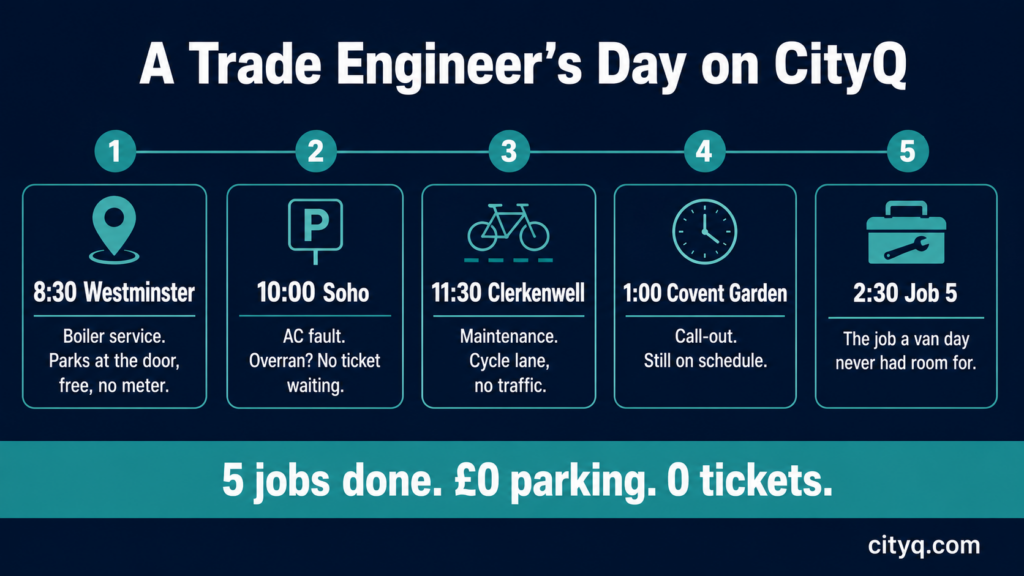
This is the difference between a vehicle that costs less and a vehicle that earns more. The recovered job — the one a van day never reaches — is worth more than a year of saved charges.
What Changes When You Swap the Van
More jobs kept per day: When each call is worth a few hundred pounds, keeping one extra job a day beats any fuel saving — and across who benefits most from a four-wheel cargo eBike, the same pattern holds: the businesses that gain most are the ones whose day is built on multiple stops, where CityQ protects billable time the van loses to traffic and parking.
A working day that holds together: On short inner-city rounds, the real variable isn’t speed on a clear road — it’s how fast you can move, stop, work and move again. CityQ is built around exactly that: legal kerbside stops, no circling, no ticket risk.
Tools that stay secure and dry: The sealed, lockable cargo box protects tools from weather and theft between jobs — a real concern for any engineer who’s had a van broken into. 175kg covers a full day’s service kit and parts.
Lower running cost, full stop: No ULEZ, no Congestion Charge, no road tax, no MOT, no fuel. Annual running cost under £1,500 against £30,000+ for a comparable city van — total cost of ownership up to 70% lower.
Stable and easy for any engineer to ride: Four wheels stay steady at low speed, on cobbles and at the kerb, even with an unevenly loaded box. Any engineer on the team can ride one from the first morning — not just the confident cyclists.
CityQ vs the Van: Why It's Legally a Bicycle
A van is a motor vehicle: it pays ULEZ and the Congestion Charge, needs a licence, MOT and road tax, sits in traffic and circles for parking. CityQ is legally a bicycle: it pays none of those charges, needs no licence, uses cycle lanes and Low Traffic Neighbourhoods, and parks free at the exact job address — every time.
Which Trades CityQ Actually Suits
HVAC engineers — service and maintenance calls, AC fault-finding, planned and reactive rounds across the city.
Plumbers — call-outs, leak repairs, parts runs and multi-job days in dense areas.
Electricians — reactive and planned electrical work, testing and small installs on urban rounds.
Facilities & maintenance firms — multi-site service across campuses, estates and commercial buildings.
Why it fits: best for dense city rounds with multiple short-duration jobs, frequent stops and quick load and unload. For heavy plant, full installs or long rural routes, keep the van. The same logic plays out across electric cargo bikes for service and repair businesses, where access, parking and multi-stop rounds shape the working day in exactly the same way.
Explore the CityQ models range
FAQs
What is the best vehicle for an HVAC engineer working in central London?
For a dense round of three to five jobs a day, a four-wheel enclosed electric cargo bike is increasingly the most practical option. It parks free at the address with no meter or penalty risk during overruns, beats traffic through cycle lanes, pays no ULEZ or Congestion Charge, and carries up to 175kg of tools locked and weatherproof. For heavy plant or long rural routes, a van still wins — but for the daily city service round, the cargo bike protects billable time the van loses to traffic and parking.
Can an electric cargo bike carry enough tools for a trades job?
Yes, for service and maintenance work. The CityQ 850 carries up to 175kg in a sealed, lockable, weatherproof box — enough for a full day of HVAC service tools, plumbing kit or electrical equipment plus parts. Tools stay protected from weather and theft at every stop. Bulky plant and full installs still need a van.
How do London tradespeople avoid parking fines and congestion charges?
By using a vehicle that’s legally a bicycle. Certified under EN15194 and EN17860, CityQ pays no Congestion Charge or ULEZ and parks free at the kerb at the job address — with no meter to expire mid-job, which is when most tradespeople pick up tickets. This removes the problem entirely rather than reducing it.
Do you need a licence to operate an electric cargo bike for trade work?
No. CityQ is legally a bicycle, so no driving licence is required. Any capable adult who can ride a bike can operate one after a short two-to-four hour induction on the four-wheel platform. For trades businesses this widens the pool of engineers and apprentices you can put on the road.
Is an electric cargo bike a realistic alternative to a work van for trades?
For dense city service rounds, increasingly yes — lower running costs and a day that doesn’t collapse from traffic and parking. For heavy plant, installs or long rural routes, the van still wins. Most firms run both: CityQ in the city, a van for the heavy jobs.
How safe is CityQ?
Safety is a core design priority. The four-wheel platform has a protective floor, doors and front body, and stays stable when loaded unevenly. CityQ bikes have carried users for over one million kilometres with no reported injury.
Can CityQ use bike lanes and park where bikes park?
Yes. As a cargo bike, CityQ can be ridden and parked anywhere cycles are allowed — saving the time normally lost to congestion and the search for car parking, up to 50% more time-efficient than a car on inner-city routes.