


Yes, a cargo ebike grant UK 2026 businesses can apply for does exist, but it is local, not national. As of October 2026, Bristol City Council offers up to £20,000 (50% of costs) and London’s Zero Emissions Network offers up to £2,500 towards a cargo bike for businesses in five boroughs. The national government fund closed several years ago.
Funding like this can cut the price of a cargo eBike by half in the right postcode, and it usually has to be approved before you buy.
Quick answer: There is no open UK-wide cargo eBike grant for businesses in 2026. Local schemes are open instead. Bristol City Council funds up to 50% of costs, capped at £20,000. London’s Zero Emissions Network (ZEN) offers up to £2,500 for businesses in Hackney, Westminster, Tower Hamlets, Newham and the City of London. Apply before you order, because most schemes will not pay for purchases made earlier. Outside these areas, the Annual Investment Allowance lets most businesses deduct the full cost of a cargo eBike from taxable profit.

Is there a national government grant for cargo eBikes?
No national grant for businesses is open at the time of writing. The Department for Transport ran an eCargo Bike Grant Fund in England in 2021/22, delivered by the Energy Saving Trust. It paid 40% of the bike cost, up to £2,500 for two-wheel models and £4,500 for three-wheel models. The Energy Saving Trust now lists that scheme as closed.
Funding has moved to councils and city programmes. That is good news for businesses in those areas, because the awards are often larger than the old national fund.
Which cargo eBike grants are open for UK businesses now?
Two schemes are confirmed open in October 2026. Grants change quickly, so check the scheme page before you plan around one.
| Scheme | Area | Amount | Who can apply | Source |
|---|---|---|---|---|
| Electric cargo bike grant | Bristol | Up to 50% of costs excluding VAT, capped at £20,000 | Businesses, charities, community groups and public bodies moving freight in Bristol | Bristol City Council |
| Cargo bike grants (Zero Emissions Network) | Hackney, Westminster, Tower Hamlets, Newham, City of London | Up to £2,500 towards a cargo bike | Businesses and organisations in those areas that join ZEN (free) | Hackney Council,
25 June 2026 |
Neither page gave a closing date when we checked, so apply early.
How does the Bristol cargo eBike grant work?
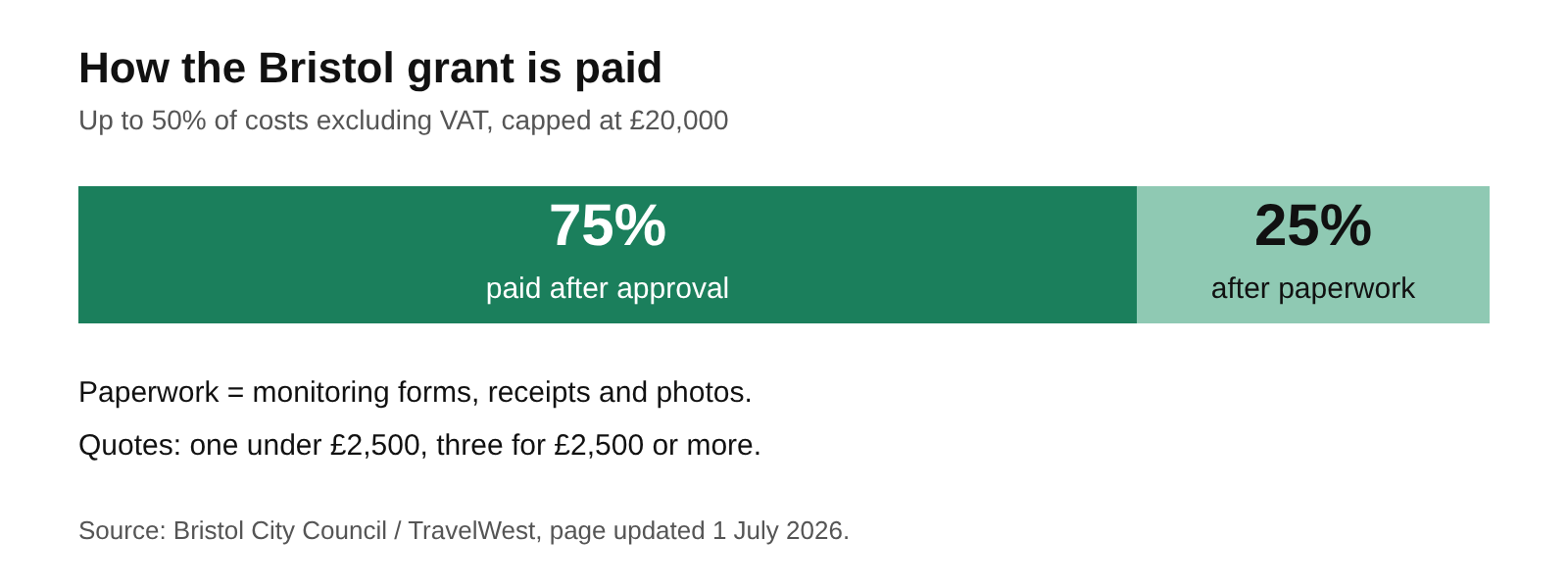
Bristol pays up to 50% of eligible costs, with a maximum grant of £20,000 per applicant. You match the grant with your own funds, so a £20,000 grant needs a project of at least £40,000 (illustrative arithmetic, not a CityQ quote).
- What it covers: the cargo eBike, battery charging equipment and cycle security. Costs are counted excluding VAT.
- How it is paid: 75% after approval, then 25% once you send monitoring forms, receipts and photos.
- Quotes: one quote under £2,500, three quotes for £2,500 or more.
- Timing: purchases made before approval are not eligible.
- Who is excluded: anything that counts as a subsidy under the Subsidy Control Act 2022, for example helping a freight company expand.
Under the Bristol cargo ebike grant, businesses can also trial a cargo bike for free before applying.
How do the London Zero Emissions Network grants work?
The Zero Emissions Network, funded through the Mayor of London’s Air Quality Fund, offers up to £2,500 towards a cargo bike. You must be a ZEN member, which is free, and your business must be in Hackney, Westminster, Tower Hamlets, Newham or the City of London. Applications to replace a diesel or petrol vehicle are particularly encouraged.
Register for ZEN first, then apply through the Workplace Travel Grants page. A separate ZEN workplace grant of up to £2,000 has also been offered to workplaces in Hackney, Tower Hamlets and Islington, so check which one fits your site.
What if there is no grant in my area?
Most of the UK has no cargo eBike grant, but the tax route is open to nearly every business.
- Annual Investment Allowance. The AIA is £1 million per year on most plant and machinery. It does not cover business cars. Ask your accountant whether a cargo eBike qualifies for your business. The cargo ebike tax deductible UK rules explain how the claim works.
- Cycle to Work. The cargo ebike cycle to work scheme may suit some employers and employees, depending on how the bike is used and who buys it.
- Free trial. With a free cargo ebike trial UK business owners can test the bike on their own routes before spending anything.
- Ask your council. If nothing is advertised, ask your local council, Business Improvement District or Clean Air team. New schemes often start with a single email.
How do I make a cargo eBike grant application stronger?
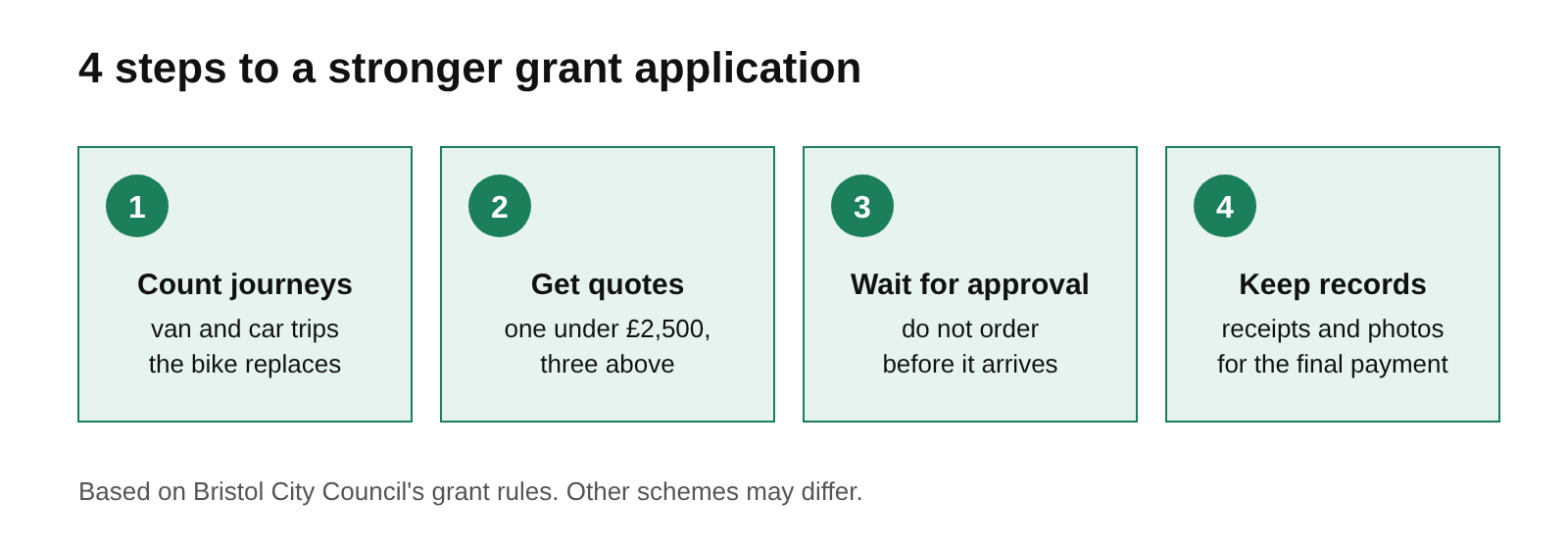
Councils fund projects that clearly cut van and car journeys. Bristol says it prioritises projects that significantly reduce car or van trips, improve life for staff or customers, and offer good value for money.
- Count the van or car journeys the bike will replace each week.
- Get your quotes ready before you apply.
- Do not order until you have written approval.
- Keep receipts and photos for the monitoring forms.
- Check the scheme accepts the vehicle type you want. CityQ is a four-wheel electrically assisted pedal cycle, and some schemes name two-wheel or three-wheel bikes in their wording, so confirm with the scheme officer first.

What does a cargo eBike cost to run after the grant?
The grant lowers the purchase price, and running costs stay low afterwards. A full charge of the 1,440Wh battery costs about 38p at the Ofgem standard rate of 26.32p/kWh (October to December 2026). A CityQ is an electrically assisted pedal cycle, so it pays no ULEZ or Congestion Charge and needs no driving licence. Real cargo ebike battery life UKfigures show how far one charge goes.
| Diesel van (illustrative) | CityQ cargo eBike | |
|---|---|---|
| Fuel or electricity, 50-mile day | About £13 (35 mpg) | About 38p per full charge |
| London ULEZ + Congestion Charge (non-compliant diesel van) | £30.50 a day | £0 |
| Driving licence needed | Yes | No |
Van costs here are illustrative. Diesel averaged 200.01p a litre on 2 October 2026, according to the RAC.
FAQ's
Q1. Is there a government grant for electric cargo bikes in the UK?
A1. Not nationally in 2026. The Department for Transport’s eCargo Bike Grant Fund ran in 2021/22 and is closed. Councils and city programmes now run the open schemes.
Q2. How much can I get towards a cargo bike in Bristol?
A2. Up to 50% of eligible costs excluding VAT, capped at £20,000 per applicant. You fund the rest yourself.
Q3. Can London businesses get a cargo bike grant?
A3. Yes, in some boroughs. Zero Emissions Network members in Hackney, Westminster, Tower Hamlets, Newham and the City of London can apply for up to £2,500.
Q4. Can I claim a grant after I have bought the bike?
A4. Usually not. Bristol, for example, does not fund purchases made before approval. Apply first and order after.
Q5. Is a cargo eBike tax deductible if I do not get a grant?
A5. For most businesses, yes. The Annual Investment Allowance is £1 million a year on most plant and machinery, excluding business cars. Check with your accountant.
Q6. What does the Bristol cargo bike grant pay for?
A6. The cargo eBike itself, battery charging equipment and cycle security can all go in one application. Costs are counted excluding VAT.
Q7. How is the Bristol cargo bike grant paid?
A7. Bristol City Council pays 75% after approval. The remaining 25% follows once you send monitoring forms, receipts and photos.
Q8. Do I have to join the Zero Emissions Network to apply in London?
A8. Yes. Membership is free, and you register first, then apply through the Workplace Travel Grants page. Your business must be in one of the eligible boroughs.
Q9. What if there is no cargo bike grant in my area?
A9. Ask your local council, Business Improvement District or Clean Air team, because new schemes often start with a single email. In the meantime, the Annual Investment Allowance and a free trial are open to most businesses.
Q10. Does a four-wheel cargo eBike qualify for these grants?
A10. It depends on each scheme’s wording. CityQ is a four-wheel electrically assisted pedal cycle, and some schemes name two-wheel or three-wheel bikes, so confirm with the scheme officer before you apply.
Next Step
Tell us your postcode and fleet size and we will help you work out which funding to apply for, then arrange a demonstration on your own routes. You can book a test drive and compare the CityQ models on the same day.
Information checked 22 October 2026. Grant terms change. Confirm with Bristol City Council, the Zero Emissions Network or your local authority before applying. This article is general information, not financial or tax advice.


