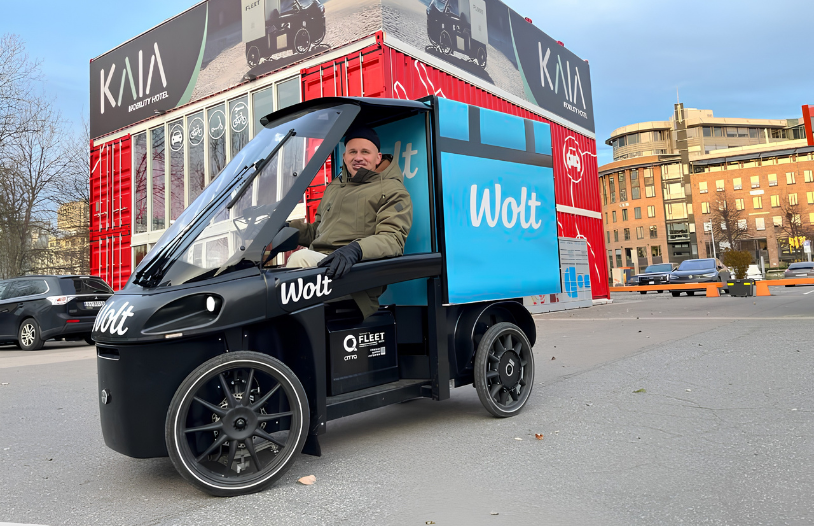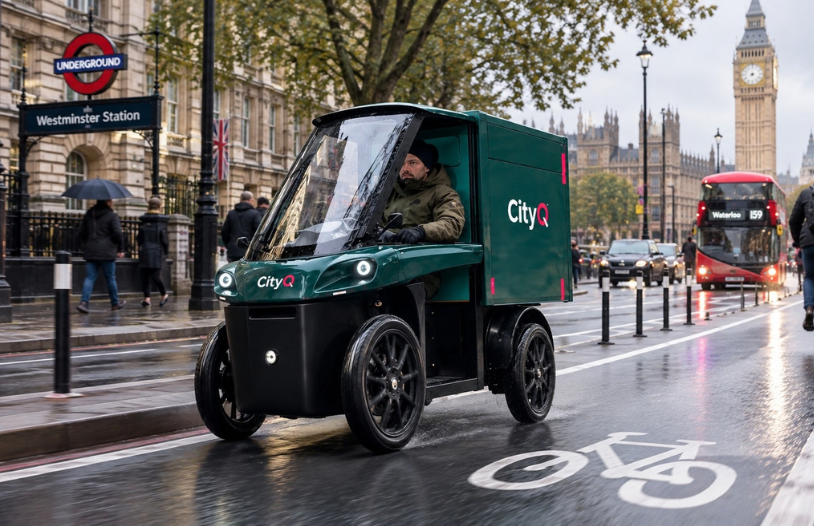
A four-wheel cargo bike carrying 200 kg shares a bike lane with a commuter on a 12 kg city bike, then pulls out into traffic and blends with vans and buses. Until 2024, that vehicle was certified against a standard written for a trekking e-bike. EN 17860 is the European standard that finally tests it for the job it actually does — and the hardest requirements in it apply to exactly the bikes most likely to replace a van.
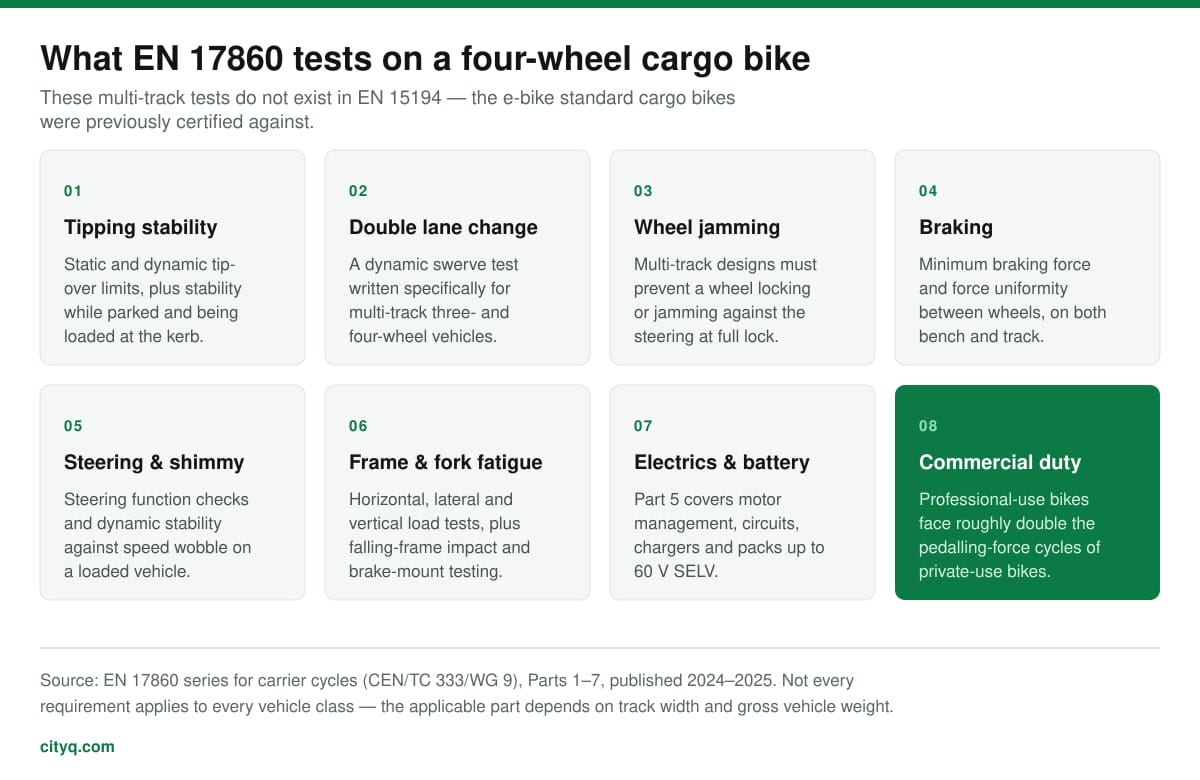
In short: EN 17860 is the European standard series for carrier cycles — cargo bikes — developed by CEN/TC 333/WG 9 and published in 2024–2025. It replaces the practice of certifying cargo bikes under EN 15194, the e-bike standard, which was never written for heavy loads or multi-track vehicles. EN 17860 tests tipping stability, braking force and braking-force uniformity, steering and shimmy, and structural fatigue at rated payload — and for three- and four-wheelers it adds multi-track-specific tests including a double lane change and prevention of wheel jamming. It applies stricter test cycles to commercial-use bikes than to private ones. It does not change a cargo bike’s legal status: a compliant pedal-assist vehicle is still a cycle, not a moped.
Why this matters in the bike lane
Most coverage of EN 17860 is written for manufacturers. The reason it matters to a business operating cargo bikes in a city is simpler, and it has nothing to do with paperwork.
A commercial cargo bike does not operate in isolation. It rides in the same bike lane as ordinary cyclists — people on city bikes, parents on school runs, teenagers, delivery riders on two wheels. Then it leaves the lane and mixes with congestion and traffic: parked cars, bus stops, junctions, pedestrians stepping off the kerb.
In that environment, the consequences of a poorly engineered cargo bike are not confined to its rider. A vehicle that tips on a camber while loaded, brakes harder on one side than the other, develops a steering wobble at speed, or jams a wheel mid-turn is a risk to everyone sharing the space with it.
That risk scales with size and weight. It is smallest on a two-wheel cargo bike carrying a few crates and largest on the biggest vehicles in the category — the three- and four-wheel cargo bikes carrying serious payload through dense city centres. Those are the vehicles cities are actively encouraging into bike lanes as van replacements, and those are the vehicles EN 17860 subjects to the most testing. That alignment is the whole point of the standard.
For an operator, the practical translation is this: a certified vehicle means your riders, your insurer, your local authority and the cyclist behind you in the lane are all working from the same evidence.
Why did Europe need a cargo bike standard at all?
Because the market outgrew the paperwork. Cargo bikes went from a niche family product to professional equipment doing six to ten hours a day, changing riders, living outdoors, and carrying loads that a city e-bike frame was never designed to absorb.
Germany saw it first and published DIN 79010 in 2020, the first standard written specifically for transport and cargo bicycles. It worked, but it was national, and cargo bike production and procurement are European. The frame failures and recalls that hit the two-wheel family cargo bike segment in 2023–2024 made the gap impossible to ignore: bikes had been assessed against a fatigue test that did not reflect how they were actually loaded.
EN 17860 is CEN’s answer. It was developed by the CEN/TC 333/WG 9 working group, with Parts 1–3 published in 2024 and the remaining parts through 2025.
What are the parts of EN 17860?
The series is split by vehicle type, because a long-john and a four-wheel delivery platform do not fail in the same ways.
| Part | Covers | Relevant to |
| Part 1 | Terms and definitions | Everyone — the shared vocabulary for specs and tenders |
| Part 2 | Lightweight single-track carrier cycles | Two-wheel cargo bikes |
| Part 3 | Lightweight multi-track carrier cycles | Three- and four-wheelers up to 300 kg gross vehicle weight |
| Part 4 | Heavyweight multi-track carrier cycles | Three- and four-wheelers above 300 kg and up to 650 kg GVW |
| Part 5 | Electrical aspects | Motor management, circuits, chargers, batteries up to 60 V SELV |
| Part 6 | Passenger transport | Passenger modules, restraints, ergonomics |
| Part 7 | Cargo trailers | Electrically power assisted cycle trailers |
Which part applies to a given vehicle depends on its track width and gross vehicle weight — so “EN 17860 certified” is an incomplete statement on its own. The useful question is which part, and for which configuration.
What EN 17860-4 covers, in detail
Part 4 is the heavyweight multi-track part, and it is the clearest illustration of how much the standard asks of a large cargo bike. EN 17860-4:2025 sets mechanical and functional requirements for heavyweight carrier cycles with or without electric assistance, covering vehicles with a gross vehicle weight above 300 kg and up to 650 kg, for commercial and professional or low-mileage use. Part 3 applies the same thinking to lighter multi-track vehicles.
The technical areas it addresses:
- Scope and definitions — heavyweight carrier cycles and their intended use cases, commercial/professional or low mileage.
- General vehicle requirements — specimen numbers for strength tests, tolerances, protrusions, sharp edges, fastener security and ergonomics.
- Stability and parking — tipping stability, both static and dynamic; parking stability while the vehicle is being loaded; double lane change tests; and prevention of wheel jamming for multi-track vehicles.
- Braking systems — hand-operated and back-pedal brakes, brake-lever ergonomics, bench and track test methods, minimum braking force, and braking-force uniformity requirements.
- Steering and shimmy control — steering function checks and dynamic stability assessments.
- Frame and structural tests — dynamic and static tests with pedalling; horizontal, lateral and vertical loads; impact (falling frame) tests; brake mount, trailer-suitability and fatigue tests.
- Front fork and wheel assembly — static and dynamic bending, axle installation, brake-mount tests, rim and tyre requirements, and wheel retention.
- Components and accessories — pedals, drive system, mudguards, saddles, lighting, reflectors, warning devices, rear-view mirrors and, where applicable, safety belts.
- Marking, manufacturer instructions and structural integrity verification.
- Annexes — test cycles for professional use, examples of complete vehicle tests, and road fatigue life test guidance.
Read that list next to the bike-lane argument above and the logic of the standard becomes obvious. Almost every item is something a rider, a cyclist alongside, or a pedestrian at a junction would notice the moment it went wrong.
How is EN 17860 different from EN 15194?
EN 15194 is the EPAC standard: it certifies that the electric assistance behaves like a bicycle’s, with a 250 W continuous rated motor, assistance cutting off at 25 km/h, and compliant electronics and battery. That is what keeps a cargo bike legally a bicycle — and out of ULEZ, Congestion Charge and licensing requirements.
What EN 15194 does not do is ask whether the vehicle stays upright with a full box on it.
The two standards are complementary, not alternatives. A commercial electric cargo bike sold in the EU should hold both.
The commercial-use distinction most buyers miss
EN 17860 does not treat a school-run cargo bike and a delivery fleet vehicle as the same product. Commercial and professional-use bikes face harder endurance testing — the pedalling-force test for commercial use runs roughly double the cycles required for private use — and where a cargo bike is used as work equipment, specific ergonomic requirements apply. Part 4 even includes annexes of test cycles written specifically for professional use.
This matters when you are comparing quotes. A bike certified for private use and a bike certified for professional duty can both say “EN 17860” in a brochure and have been through meaningfully different test programmes.
Five questions to ask any cargo bike supplier in 2026
- Which parts of EN 17860 are you certified to? Part 3 and Part 4 cover different weight classes of multi-track vehicles, and Part 2 covers two-wheelers only.
- Can I see the third-party test report, not just the certificate? A declaration is not the same as a test house result.
- Does the certification cover the exact configuration I’m ordering? Payload rating, battery capacity, motor rating and cargo module all affect it.
- Was it tested for the commercial or private duty cycle? If your riders are on it eight hours a day, this is the line that matters.
- Do you also hold EN 15194 and CE? EN 17860 covers the vehicle, EN 15194 covers the drive, CE is the legal gateway to the EU market.
Several two-wheel cargo bike manufacturers have already published their own accounts of what the standard means for their products. The four-wheel side of the category has been quieter — which matters, because the multi-track requirements are the demanding ones. CityQ holds CE, EN 15194 and EN 17860 certification, and is, to the best of our knowledge, the first four-wheel cargo bike in Europe certified to EN 17860. The background is in our EN 17860 certification announcement, and the handling characteristics the standard now tests for are the ones we wrote about why four wheels feel safer in cities.
Does EN 17860 change the legal status of a cargo bike?
No — and this is the most common misreading of it. EN 17860 formally distinguishes carrier cycles from motor vehicles under EU Regulation 168/2013, which means manufacturers certify to a fit-for-purpose cycle framework rather than pursuing moped-style type-approval.
For an operator, nothing changes about the economics that make cargo bikes work: a compliant pedal-assist cargo bike is still a cycle, still exempt from the ULEZ and Congestion Charge, still parkable at the door, and still rideable without a driving licence. If anything, certification makes the case easier to defend internally — the “is this thing actually safe for my staff, in a lane full of other cyclists?” question now has a European standard attached to it. We cover the licensing detail in do you need a driving licence for a 4-wheel e-bike in the UK, and the full cost comparison in which cargo eBike is best for delivery in the UK in 2026.
Where the standard stops?
EN 17860 tells you a vehicle has been engineered and tested for its class and duty cycle. It does not tell you the bike suits your route profile, that your depot can support it, or that your riders have been trained. Certification is not a substitute for sensible loading, maintenance or riding in a shared lane. It also does not make a cargo bike a van: long trunking runs, bulky pallets and rural multi-drop still favour four wheels with an engine. The standard raises the floor. Route design and rider behaviour still decide the outcome.
FAQ's
Q1: What is EN 17860 in simple terms?
A:1 EN 17860 is the European safety standard series for cargo bikes, published by CEN between 2024 and 2025. It sets design requirements and test methods for the structure, stability, braking, steering and electrics of cargo bikes carrying goods or passengers.
Q:2 What does EN 17860-4 cover?
A:2 EN 17860-4:2025 sets mechanical and functional requirements for heavyweight carrier cycles with a gross vehicle weight above 300 kg and up to 650 kg, with or without electric assistance, for commercial, professional or low-mileage use. It covers stability and parking, braking, steering and shimmy, frame and fork structural tests, components, marking and manufacturer instructions.
Q:3 Why does EN 17860 matter more for four-wheel cargo bikes?
A:3 Several of its requirements exist only for multi-track vehicles — tipping stability under load, a double lane change test and prevention of wheel jamming. Three- and four-wheel cargo bikes are also the largest and heaviest vehicles in the category and the ones most often used to replace vans, so they share bike lanes and traffic with the highest consequence if something fails.
Q:4 Are large cargo bikes safe to use in bike lanes?
A:4 A cargo bike certified to EN 17860 has been tested for stability, braking-force uniformity, steering behaviour and structural strength at its rated payload — the characteristics that determine how predictably it behaves alongside other cyclists. Certification does not replace rider training, correct loading or lane discipline.
Q:5 Does EN 17860 replace EN 15194?
A:5 No. EN 15194 still certifies the electric drive system of a pedal-assisted cycle. EN 17860 certifies the cargo vehicle. An electric cargo bike sold in the EU needs both.
Q:6 Does EN 17860 replace DIN 79010?
A:6 Effectively, yes. DIN 79010 was Germany’s national cargo bike standard from 2020 and formed much of the groundwork for EN 17860, which extends it with more detailed testing and Europe-wide scope. National standards conflicting with the EN series are being withdrawn.
Q:7 What is the difference between Part 3 and Part 4 of EN 17860?
A:7 Both cover multi-track cargo bikes — three- and four-wheelers. Part 3 applies to lightweight multi-track carrier cycles up to 300 kg gross vehicle weight; Part 4 applies to heavyweight multi-track carrier cycles above 300 kg and up to 650 kg.
Put the standard to work
If you are writing a cargo bike specification or tender this year, use the five questions above on every supplier — including us. Then book a test drive and ride the certified four-wheeler in real traffic before you commit a fleet to it.