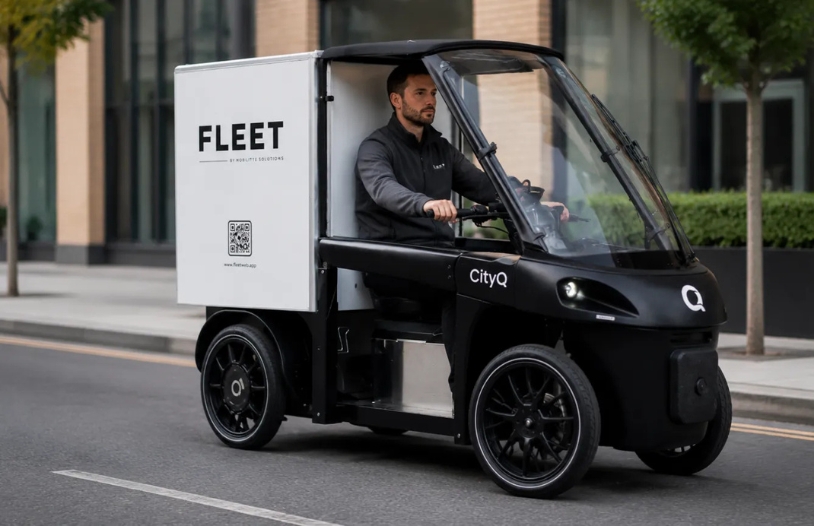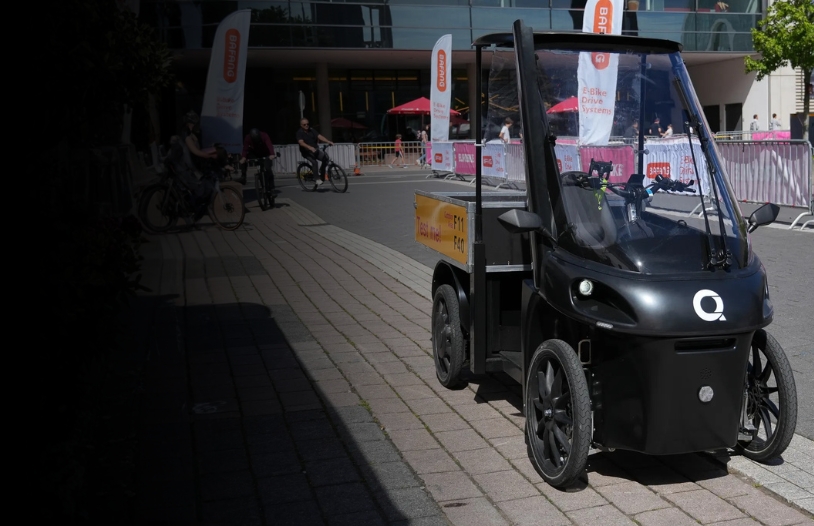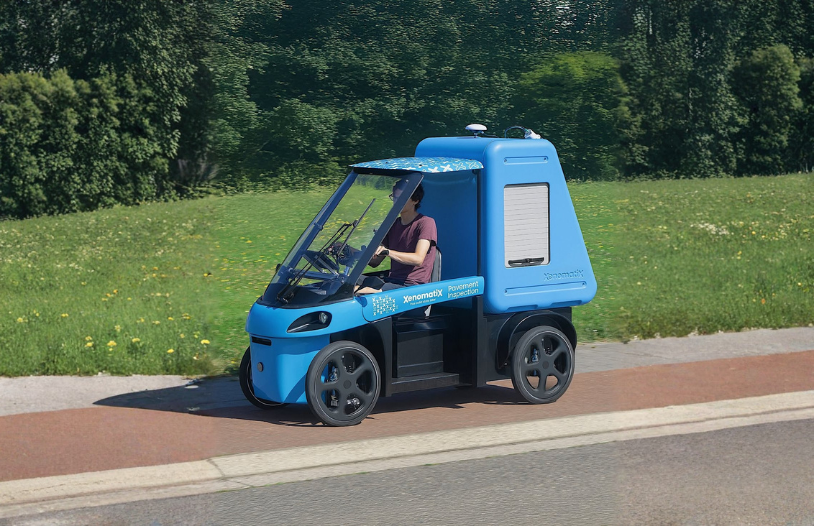
For most UK delivery businesses running routes inside a city or town centre, the best cargo ebike for delivery in the UK in 2026 is a 4-wheel, weather-protected model with 150–200kg of payload and full EAPC (Electrically Assisted Pedal Cycle) legal status — because that combination is what actually survives daily use, not just a spec sheet. CityQ, Urban Arrow and EAV all build machines that qualify, but they solve for different jobs, and picking the wrong one is an expensive mistake to unwind six months into a lease.
What Actually Makes a Cargo eBike "Best" for UK Delivery in 2026?
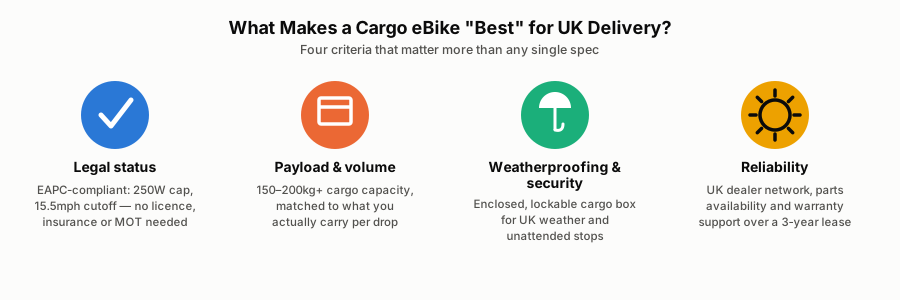
Before comparing models, it’s worth being specific about what “best” should mean for a business, rather than a leisure rider. Four things matter more than anything else on a spec sheet:
Legal status first. To be ridden without a driving licence, insurance, MOT or road tax in the UK, a cargo ebike must meet EAPC rules: motor power capped at 250W, pedal assistance cutting out at 15.5mph, and working pedals throughout. Every model discussed below is EAPC-eligible in at least one configuration, but it’s worth confirming on the spec sheet for the exact variant you’re buying — some higher-power “cargo bikes” marketed for logistics are actually mopeds or L-category vehicles requiring a licence and insurance.
Payload and volume second, matched to what you actually carry — a parcel courier doing 80+ multi-drop stops a day has very different needs from a bakery running two supply trips. Weatherproofing and security third: UK weather and UK street crime both argue for an enclosed, lockable cargo box over an open rack, especially for anything left unattended between drops. And reliability fourth — parts availability, dealer support and the manufacturer’s own track record matter more over a three-year fleet lease than any single spec.
4-Wheel vs 2-Wheel and 3-Wheel Cargo eBikes: Which Wins for Business Delivery?
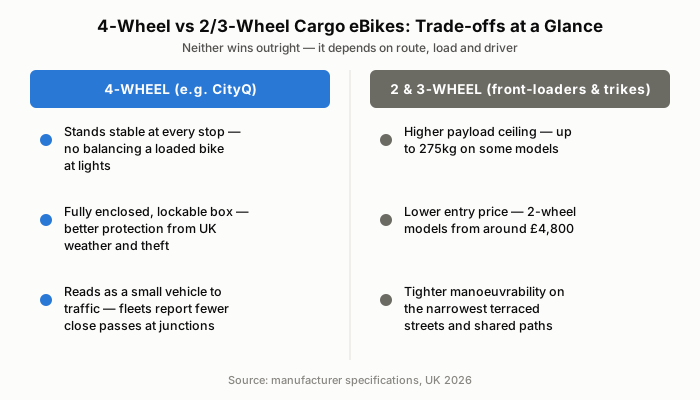
The best 4-wheel cargo ebikes in the UK share three practical advantages over 2- and 3-wheel designs for commercial use. They don’t require the rider to balance a stationary loaded bike, which matters at every red light and every kerbside stop on a multi-drop round — no need to put a foot down at lights with a loaded box, and no learning curve for riders coming from a van rather than a bicycle. They typically enclose the cargo bay fully rather than relying on a rack, tarp or add-on tent, which matters for parcels, hot food and tools left unattended between deliveries in UK weather. And their footprint tends to read to other road users as closer to a small vehicle than a bicycle, which several CityQ fleet customers report translates into fewer close passes at junctions.
For fleets hiring drivers who aren’t confirmed cyclists, or running routes through UK winters where a rider is in and out of a box 60+ times a shift, that stability and weatherproofing tends to matter more day-to-day than extra payload most routes never use. If your business is already considering replacing a delivery van with a cargo ebike, the 4-wheel format is generally the closer like-for-like swap for drivers used to a cab.
Two- and three-wheel bikes still win on raw payload ceiling, on price at the entry end of the market, and on manoeuvrability through the narrowest terraced streets and shared-use paths where a wider 4-wheel footprint is more restricted. For a single-rider round with predictable, lighter loads, a well-specced 2-wheel bike can be the more cost-effective choice.
How Much Does It Cost to Run a Commercial Cargo eBike vs a Van in the UK?
This is usually where the decision actually gets made, because the day-to-day cost gap between a van and an EAPC-classified cargo ebike in a UK city is large and compounds daily.
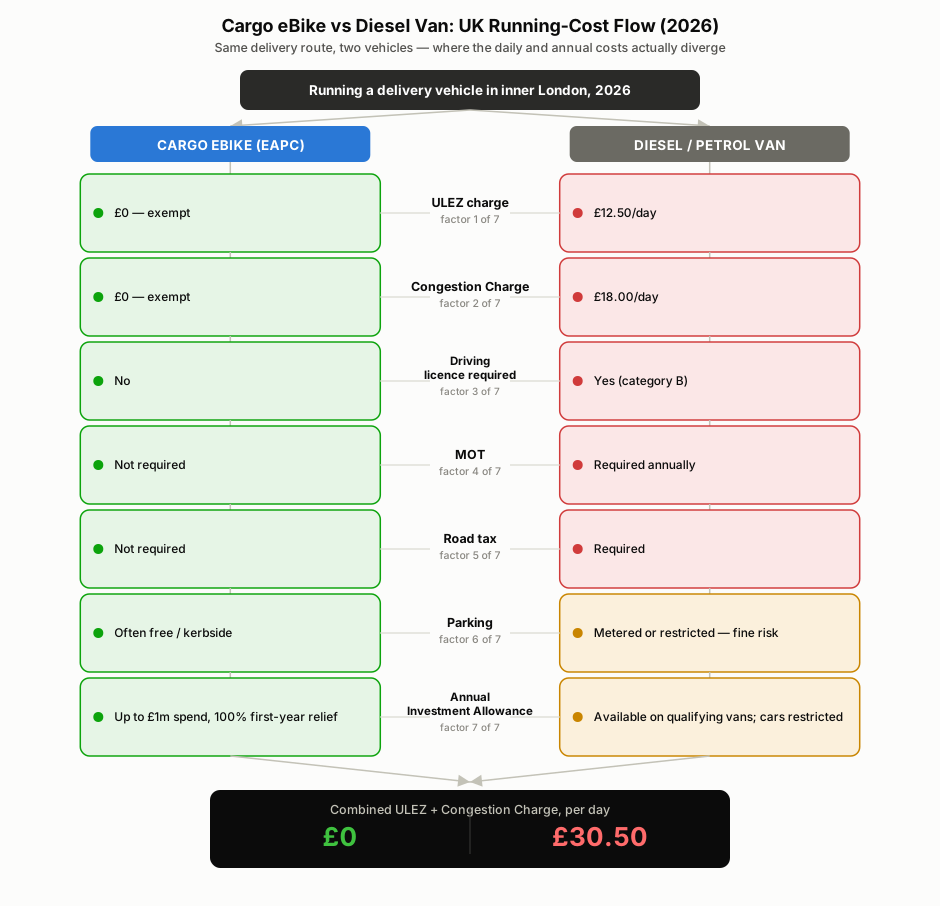
Purchasing a cargo ebike may also qualify for the UK’s Annual Investment Allowance, letting a business deduct 100% of the qualifying cost against profits in the year of purchase rather than depreciating it over several years — we’ve broken down exactly how that works, including a worked example, in our guide to whether a cargo eBike is 100% tax deductible in the UK. As with any tax treatment, confirm the specifics with your accountant, since AIA eligibility depends on your business structure and existing capital spend.
Real UK Businesses Already Running Cargo eBike Fleets
None of this is theoretical. DHL has run CityQ cargo ebikes on London routes for two years, logging over one million operational kilometres with zero reported rider injuries — the full breakdown of what that operation proves is in our look at DHL’s two-year London cargo bike deployment. Wolt has scaled quick-commerce deliveries around 4-wheel cargo ebikes in several European cities, and EAV’s UK-built bikes are already running in DPD’s fleet. For businesses specifically weighing this up for hot food and beverage rounds, our guide to the best cargo eBike for food delivery in the UK goes deeper on box insulation, stop-time and route planning for that use case.
The pattern across all of them is the same: the eBike doesn’t need to win on every spec to win on the route. It needs to be reliable enough, weatherproof enough and cheap enough per drop that it beats a van on the specific journeys a business actually runs.
FAQ
Q 1. Which cargo ebike is best for parcel and courier delivery in the UK?
Ans: For high-frequency, multi-drop parcel rounds, a 4-wheel model with an enclosed, lockable cargo box — such as the CityQ 1200 — is generally best, because it protects parcels from weather and theft between stops and doesn’t require the rider to balance a loaded bike at every stop.
Q 2. How much payload do I need for a UK delivery cargo ebike?
Ans: Most parcel, food and quick-commerce rounds fit comfortably within 150–200kg of payload and 1–1.3m³ of cargo volume. Bulkier trade or events loads may need the higher end of the range, such as the CityQ Pickup at 200kg.
Q 3. Do I need a driving licence to ride a commercial cargo ebike in the UK?
Ans: No, provided the bike meets EAPC rules (250W motor limit, 15.5mph assist cutoff, working pedals) it’s legally a bicycle, so no driving licence, insurance, MOT or road tax is required. We cover the legal detail in full in do you need a driving licence for a 4-wheel e-bike in the UK.
Q 4. Do I need insurance for a commercial cargo ebike in the UK?
Ans: It isn’t a legal requirement — an EAPC-classified cargo ebike is treated as a bicycle, not a motor vehicle. In practice, most UK delivery businesses insure their cargo ebikes anyway, against theft, accidental damage and third-party liability, given the value of the bike and its cargo on the road every day. Check whether your existing business or fleet insurance already covers e-bikes, or ask a specialist cargo bike insurer for a commercial policy.
Q 5. How much does a commercial cargo ebike cost in the UK in 2026?
Ans: UK prices for business-grade cargo ebikes typically range from around £4,800 for a 2-wheel longtail up to £13,000+ for a UK-built 4-wheel model, before any Annual Investment Allowance tax relief is applied. CityQ pricing is quoted per configuration — get an offer for exact numbers.
Q 6. Can I test a cargo ebike before committing to a fleet in the UK?
Ans: Yes — most reputable UK cargo ebike suppliers offer a trial or test ride, and CityQ offers a test drive so you can run a loaded box on your own route first. Testing under your actual traffic, gradients and weather is the most reliable way to confirm payload, range and stop-time claims hold up in real use, rather than relying on spec sheets alone.
Ready to see the numbers on your own routes? Book a test drive or get an offer for a CityQ 4-wheel cargo ebike.